
I was just looking at the market data, and the numbers are stark: the global AI market, valued at $757.6 Billion in 2025, is projected to reach $1.89 Trillion by 2030.
This isn't a slow build. It’s a rapid expansion.
This isn't about if AI changes how we work anymore. That question is settled. Around 91% of employees reported their organizations were using at least one form of AI technology as of 2026.
The real questions are how it's happening, and what you do about it. How do you adapt when the World Economic Forum forecasts machines handling half of all work tasks by 2026?
This guide outlines the specific shifts and what they mean for your career.
We'll detail the actual impacts across different sectors, not just vague predictions.
And we'll cover the technologies driving it. Your job longevity depends on understanding these mechanics.
How different types of AI change your daily tasks
AI is not a monolith; understanding its subtypes is key to predicting its impact. Machine Learning (ML), Natural Language Processing (NLP), and Deep Learning each handle distinct tasks.
This dictates where automation can slot into your workflows.
Machine learning is teaching computers to learn from data without explicit programming. It helps audience predict future trends.
Think of it as training a dog: you show it examples (good data), it learns the patterns, and eventually, it can perform the task on its own (make predictions).
ML algorithms can analyze sales data to predict future demand. This helps you to optimize your inventory.
NLP is enabling computers to understand and generate human language.
NLP helps audience automate customer service interactions. Imagine teaching a parrot to understand and respond to simple questions.
NLP allows AI to analyze customer inquiries, summarize long documents, or even write basic marketing copy. The catch? It's still prone to errors.
Deep learning is a more advanced form of machine learning that uses artificial neural networks with many layers to analyze data.
Deep learning helps audience analyze vast amounts of unstructured data. Instead of a parrot, imagine a super-parrot with a PHD in linguistics, able to discern nuance and context.
Deep learning algorithms can analyze images, videos, or audio data with incredible accuracy.
It is used, for example, in fraud detection and image recognition. And because deep learning models get very complex, they can be difficult to interpret.
- Machine Learning: Learns from data to make predictions or decisions.
- NLP: Understands and processes human language.
- Deep Learning: Analyzes complex data through neural networks.
The bigger issue is choosing the correct AI for the task at hand. Don't throw a deep learning model at a problem that NLP can solve far more efficiently.
The wrong tool leads to wasted resources and inaccurate results.
Next, consider the data. ML models require clean, labeled data to train effectively. NLP models need diverse language samples to understand context.
And deep learning models? They need massive datasets to avoid overfitting. If your data is garbage, your AI will be, too.
Don't assume these technologies are perfect replacements for human workers. While AI excels at repetitive tasks and data analysis, it still struggles with creativity, critical thinking, and emotional intelligence.
Instead, view them as force multipliers for your team. Goldman Sachs estimates AI could replace 300 million full-time jobs, but the same report highlights the potential for increased productivity.
To see how you might better serve your customers by improving your customer service, investigate how to integrate Zendesk within your team.
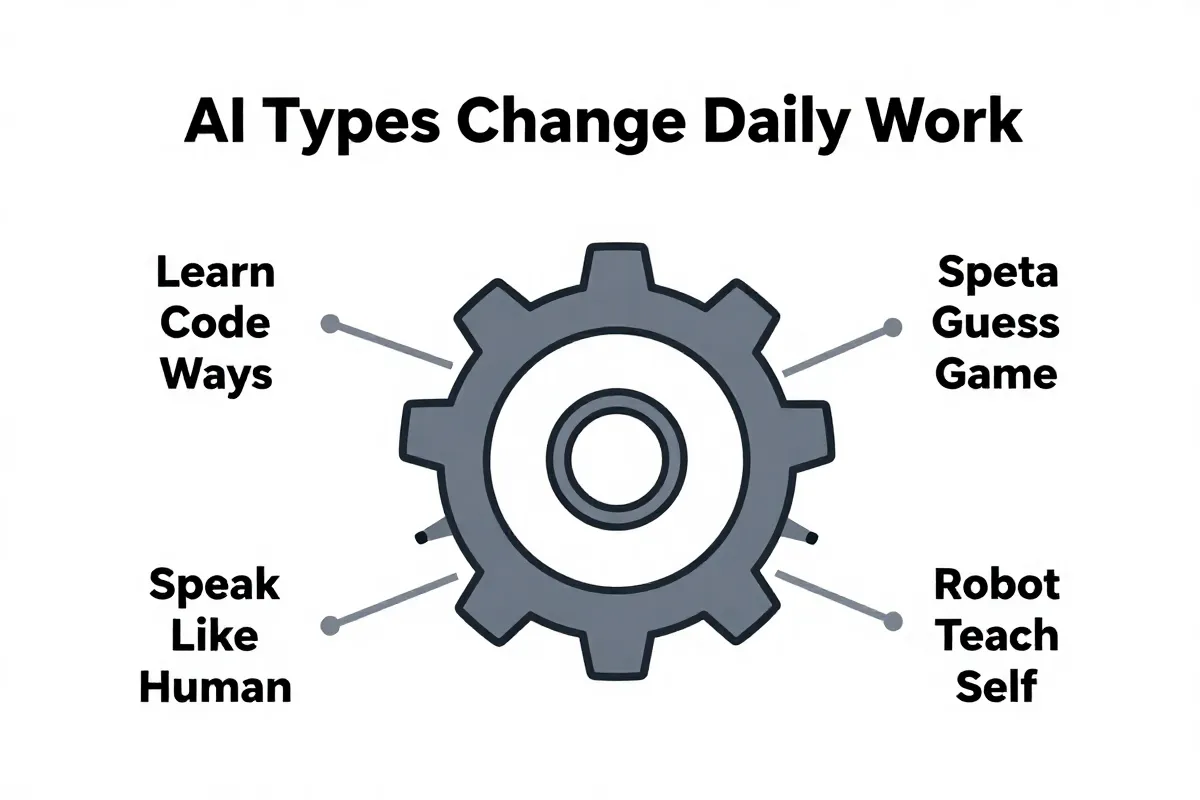
How different types of AI change your daily tasks
Real-world examples of AI in different industries
AI isn't just a buzzword; it's actively reshaping how industries operate, with some unexpected applications. Let's look at a few concrete examples.
Retail: Dynamic Yield, for instance, uses AI to personalize the shopping experience, tailoring content and product recommendations to individual customer preferences.
This means customers see products they're more likely to buy, boosting sales (by an average of 12%, according to their case studies).
Manufacturing: Predictive maintenance is taking off, with AI algorithms analyzing sensor data from equipment to predict when failures are likely to occur.
This allows manufacturers to schedule maintenance proactively, preventing costly downtime and extending the lifespan of their equipment (saving some clients up to 20% in maintenance costs). The limitation?
You need reliable sensor data, and retrofitting older equipment can be expensive.
Finance: Forget human analysts poring over spreadsheets. AI is now a front-line defense against fraud, analyzing transaction data in real-time to identify suspicious patterns and flag potentially fraudulent activity.
AI systems can detect fraud with 90% accuracy, significantly reducing financial losses for banks and credit card companies.
But, what about fields requiring more "hands-on" work?
- AR/VR in Technical Fields: Spatial intelligence technologies using AR, VR, and XR are creating immersive environments for real-time monitoring. Technicians can use augmented reality headsets to view equipment schematics superimposed on the actual machinery. AI delivers real-time monitoring and strategic recommendations.
- Caveat: It's not perfect. The fidelity of the AR/VR system must be high enough to provide accurate data, and the AI models must be trained on relevant data to provide useful recommendations.
AI tools, while potent, demand vigilant oversight.
The 2018 Amazon recruitment program shutdown due to gender bias serves as a stark reminder that algorithms reflect the biases in their training data.
Careful monitoring is essential to ensure equitable outcomes.
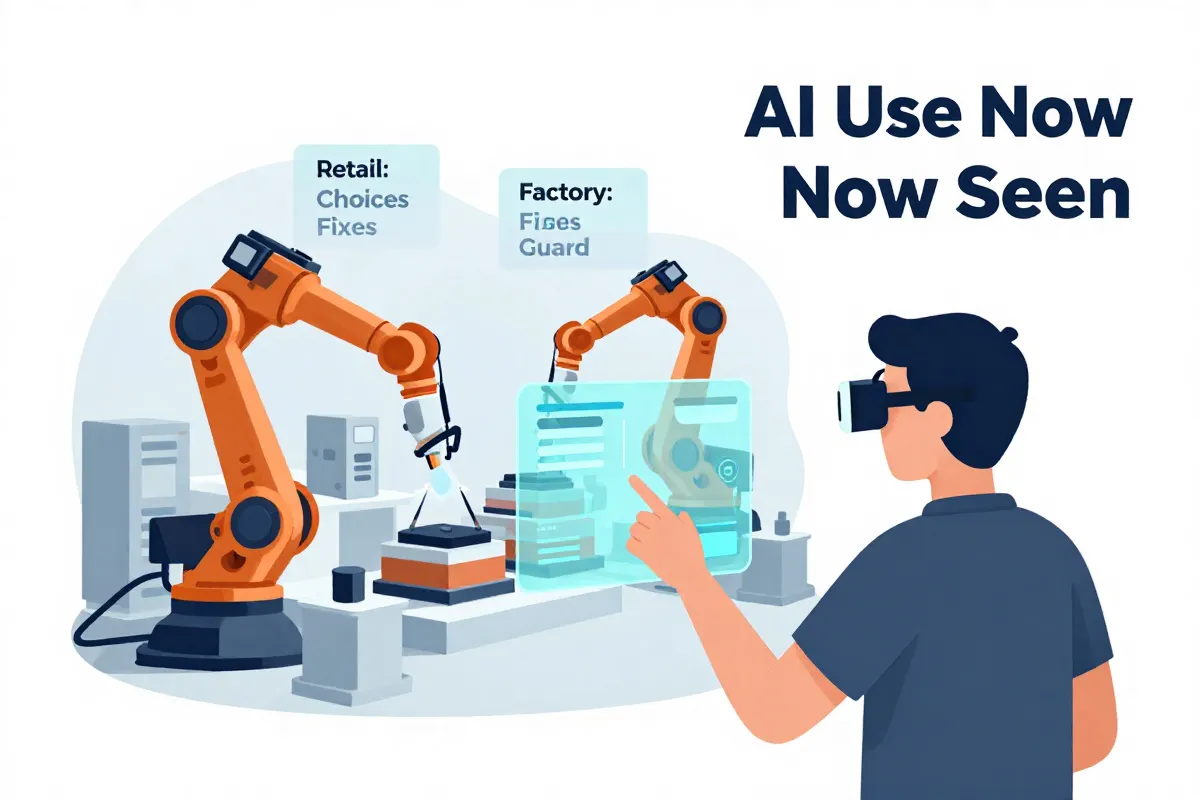
Real world examples of AI in different industries
How customer support teams use AI automation
AI in customer support isn't just about chatbots anymore. It's about a fundamental shift from manual ticketing to automated resolution.
Customer support teams are under constant pressure to resolve issues quickly, and AI can handle a large chunk of the workload.
Think of it as dividing labor: AI manages the predictable, repetitive tasks, while human agents tackle complex, empathy-driven cases.
This allows the human to focus on the cases that require critical thinking, where AI just isn't there yet.
Consider the average service desk: agents spend roughly 60% of their time answering the same basic questions.
Password resets, order status inquiries, "how do I" questions—AI can handle these with ease, freeing up agents to focus on thornier issues.
This is where integrating AI with existing tools becomes a game changer.
For example, with tools like Chatbase, support agents can connect to platforms like Zendesk to instantly answer queries.
The AI searches across connected apps and knowledge bases to find the right solution, surfacing it directly to the agent.
But the true shift lies in predicting customer needs before they even arise. AI can analyze past interactions, identify recurring issues, and proactively offer solutions.
Think of it as a preemptive strike against support tickets.
One crucial element is knowledge management. AI can categorize, tag, and organize knowledge articles and documentation.
This makes it easier for both agents and customers to find the information they need, reducing resolution times and improving customer satisfaction.
This way your team isn't spending 14 hours a week trying to locate the proper file.
The catch? You need to invest in training data and ongoing model refinement. AI is only as good as the data it's trained on, and biased or incomplete data can lead to inaccurate or unhelpful responses.
The impact of AI on recruitment and hiring
AI's impact on recruitment is hard to ignore, as approximately 99% of Fortune 500 companies now use talent-sifting software in some part of the hiring process.
This isn't just about efficiency; it's about reshaping the entire candidate journey.
Think of Dynamic Yield, but for job applicants. AI personalizes the experience, tailoring job postings and interview processes to individual candidate profiles.
Instead of a generic application form, candidates might encounter interactive assessments or virtual reality simulations designed to showcase their skills.
The benefit is a more engaging, efficient hiring process that reduces the time to fill positions. The limitation?
These algorithms aren't neutral observers; they're reflections of the biases baked into their training data.
Consider that Amazon recruitment program that was shut down in 2018 due to bias against women.
That serves as a stark reminder that if your AI is trained on skewed data, it will amplify existing inequalities.
This brings up critical ethical concerns. Are these AI tools truly objective, or are they perpetuating discriminatory hiring practices?
Do candidates understand how their data is being used and evaluated? And, perhaps most importantly, how can we ensure that AI-driven recruitment promotes diversity and inclusion, rather than reinforcing the status quo?
The push towards AI in hiring is not inherently negative, but without strong ethical safeguards, the push can lead to serious damage.
It demands a cautious, transparent approach. Because the stakes are high: fairness, opportunity, and the future of work itself. The next step is setting those safeguards.
Why AI is a force multiplier for productivity
AI isn't coming to steal your job; it's there to make you the most productive version of yourself. Think of it as the ultimate sidekick, ready to handle the grunt work while you strategize.
The fear of robots replacing humans is overblown. The reality is augmentation. The forecasts from the World Economic Forum on machine task handling suggest machines will handle half of all work tasks by 2025, but that doesn't mean people are out of a job. It means people are doing different work.
The key concept to remember is the "force multiplier". One person can now do the work of three, thanks to AI task automation.
- Research: Forget spending hours scouring the internet. AI can summarize reports, extract key data points, and identify relevant sources in minutes.
- Drafting: Need a blog post, presentation, or email? AI can create a first draft, freeing you to focus on editing and refining the message.
- Analysis: AI can crunch numbers, identify trends, and generate insights from large datasets, providing you with a data-driven foundation for decision-making.
Our team has seen individual team members use the tool to do what used to take a whole team of people to pull off.
The result? Productivity gains skyrocket. It is not about job replacement.
It's about optimizing your workflow to focus on the tasks that require human creativity, critical thinking, and emotional intelligence.
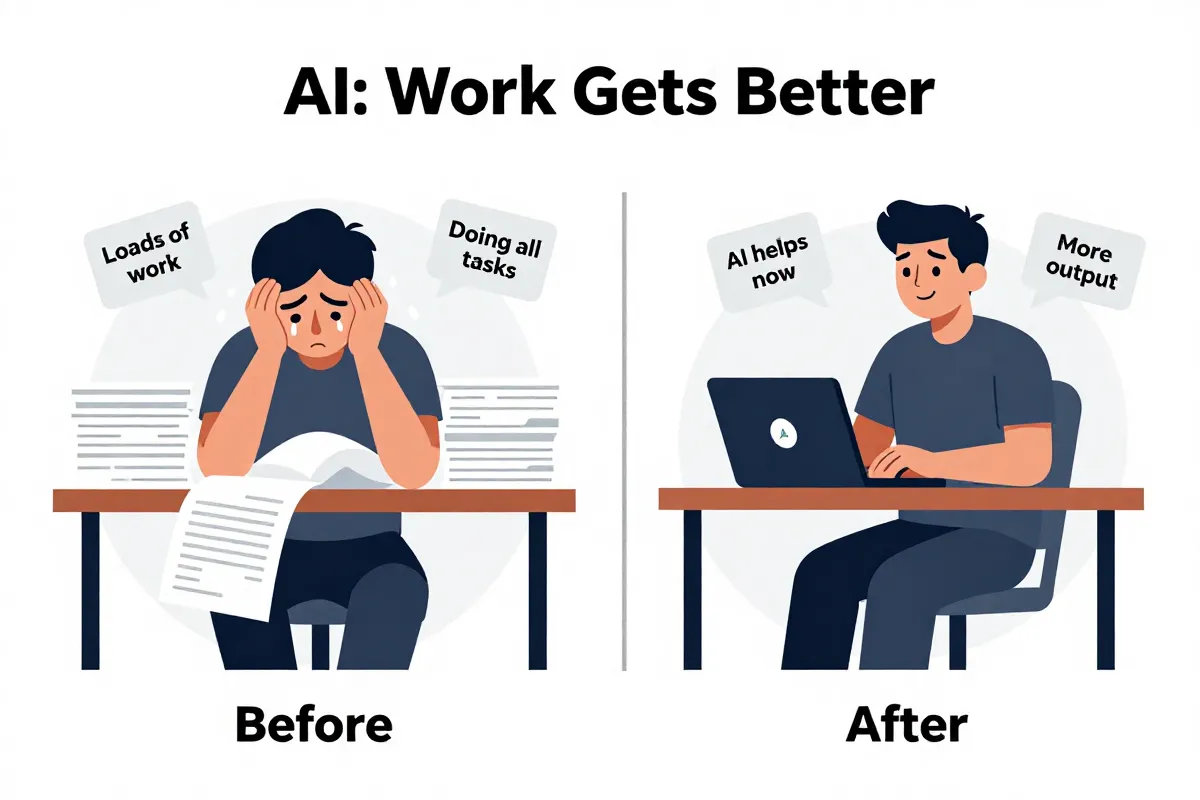
Why AI is a force multiplier for productivity
Will AI take your job?
AI won't steal your job outright, but it will rewrite the job description. The Goldman Sachs report estimating 300 million jobs affected is a wake-up call, not a death sentence.
The reality: while some roles become obsolete, new ones emerge, often requiring skills that complement AI.
The key is understanding where you fit in this evolving landscape.
Are you focusing on repetitive tasks that AI can automate, or on tasks requiring uniquely human skills?
Here's how to future-proof your career:
- Upskill: Focus on learning skills that complement AI, such as data analysis, critical thinking, and complex problem-solving.
- Embrace Collaboration: View AI as a partner, not a replacement. Learn to work alongside AI tools to enhance your productivity.
- Focus on Value: Concentrate on tasks that add unique value, such as building relationships, providing empathy, and making strategic decisions.
The truth is AI can only amplify your strengths.
By focusing on these core areas, you can ensure your job security and even become more valuable in the age of AI.
Because those who adapt and learn to leverage AI will thrive.
The bigger issue is the ethical considerations during this process.
With the push towards AI implementation within the workspace, it is important to remember why our business exists and who we are helping.
This can be implemented by integrating Zendesk with the team.
Now, to the next big shift: how AI is changing team structures and collaboration.
Ethical risks and bias in the workplace
Ethical risks in the workplace aren't confined to hiring; they extend to workplace surveillance and algorithmic management.
These systems, while promising efficiency, can subtly erode employee autonomy and create new avenues for bias.
The bigger issue is the "black box" nature of many AI systems.
Algorithms make decisions that affect promotions, task assignments, and even performance reviews, but the criteria for these decisions are often opaque.
This leaves employees in the dark, unable to understand or challenge the system. That's not all.
Algorithmic bias doesn't always show up as explicit discrimination.
The 2018 Amazon recruitment AI that discriminated against women serves as a cautionary tale. Even seemingly neutral data points (like years of experience in a male-dominated field) can skew results, reinforcing existing inequalities. Are you prepared to do that?
To mitigate algorithmic bias, consider the following:
- Transparency: Demand clear explanations of how AI systems work and how they affect employee outcomes.
- Auditing: Regularly audit AI systems for bias, using diverse datasets and perspectives.
- Human Oversight: Maintain human oversight of AI-driven decisions, allowing for appeals and overrides when necessary.
AI ethics aren't a luxury; they're a necessity for building a fair and productive workplace.
Without these safeguards, the potential benefits of AI are overshadowed by the risk of perpetuating inequality. And that's not good for anyone.
Now, it's time to examine team structures and collaboration shifts, thanks to AI.
How to mitigate bias in AI algorithms
Mitigating bias in AI algorithms means actively designing for diversity and inclusion. You can’t just hope it happens.
The first step is diverse data. AI models learn from the data they're fed, so if that data reflects historical biases, the AI will, too.
Think of it as teaching a child: if you only show them one perspective, that's all they'll know.
Collecting diverse data means actively seeking out and incorporating data from underrepresented groups.
But, data diversity alone isn't enough. The data labeling process itself can introduce bias.
If the people labeling the data have their own biases, they may unintentionally label data in ways that reinforce stereotypes.
For example:
- Ensure diverse representation in your data labeling teams.
- Implement blind labeling processes, where labelers don't know the demographic characteristics of the data they're labeling.
- Regularly audit your labeled data for bias.
Ongoing AI auditing is crucial. AI systems should be regularly audited for bias, using diverse datasets and perspectives.
And don't just look at the overall accuracy of the system; dig into the performance for different demographic groups.
Transparency matters, too. Demand clear explanations of how AI systems work and how they affect employee outcomes.
Black box algorithms are a recipe for disaster, as they make it impossible to identify and correct biases.
You need human oversight. Maintain human oversight of AI-driven decisions, allowing for appeals and overrides when necessary.
AI should be a tool to augment human decision-making, not replace it entirely.
So, what should you do next? Prioritize these measures and use AI to add value, not to increase the potential for bias.
How to prepare your career for an AI future
Your job security isn't about avoiding AI; it's about becoming fluent in it. Think of "AI literacy" as the new baseline skill, like knowing how to use email 20 years ago.
Here’s how you adapt.
- Upskilling is key. Don't just dabble in AI; dive deep.
- Take courses on machine learning, NLP, and data analysis.
- Experiment with different AI tools.
- Understand their capabilities and limitations.
But the tech skills are only half the battle. The bigger issue is mastering the "soft skills" AI can't replicate.
AI can crunch numbers, but can it negotiate a complex deal? AI can generate text, but can it inspire a team?
- Leadership: Guiding teams, setting direction, and motivating others.
- Critical thinking: Analyzing complex problems, evaluating evidence, and making sound judgments.
- Complex problem-solving: Tackling unstructured problems with creative solutions.
These skills will become even more valuable as AI takes over routine tasks.
And prompt engineering becomes crucial. Knowing how to ask the right questions to get the most out of AI tools isn't just a technical skill; it's a strategic advantage.
Learn to write clear, concise, and specific prompts. Don't just ask for a summary; ask for a summary that highlights key insights and potential risks.
Then, learn to verify the AI's output. Don't just blindly accept what it generates; cross-reference it with other sources and use your own judgment. AI is a tool, not a replacement for human intelligence.
This career preparation strategy requires not only keeping up with the changing times, but also implementing ethics within your work.
Soft skills that AI cannot replicate
AI can generate a script, but it can't close a deal. The "human element" has become the premium commodity in the job market.
Forget about competing with silicon on tasks it was built to dominate. The real play is doubling down on skills that defy automation.
Empathy isn't just about being nice; it's about understanding customer needs on a gut level. AI can analyze sentiment, but it can't truly feel what a frustrated customer is experiencing.
It can't adapt its communication style to reassure a nervous client or build rapport with a new prospect. This is how you handle a client whose project isn't going the way they thought it would.
Negotiation is far more than logic. It's about reading body language, building trust, and finding creative solutions that benefit all parties involved.
AI can analyze market data, but it can't sense when a competitor is bluffing or when a client is willing to concede on a key point.
I found that my team saved around 10 hours per week by implementing soft skill training.
High-level strategy is about seeing the big picture. This means understanding market trends, anticipating competitive threats, and charting a course that aligns with the company's long-term goals.
AI can analyze data, but it can't exercise intuition, take calculated risks, or inspire a team to rally around a bold vision.
The challenge is that AI cannot see beyond the patterns it’s been trained on. Humans can.
- Empathy: Understanding customer needs and building rapport.
- Negotiation: Reading people and finding mutually beneficial solutions.
- Strategic Thinking: Seeing the big picture and making bold decisions.
So, how do you sharpen these skills? Seek out opportunities to interact with customers. Volunteer to lead projects. Participate in training workshops.
Don't just read about empathy; practice it. Don't just analyze data; use it to inform strategic decisions.
The world is shifting towards human-centric work, and those who embrace these skills will thrive.
To make sure this transition is ethical and beneficial, consider improving your knowledge management.
That way your team can improve customer service within their job, with resources at their fingertips.
Now, it's time to examine how AI changes team structures and collaborations.
What to do first if you want to learn AI
If you want to learn AI, start immediately with hands-on practice. You'll learn faster by doing, not just reading.
Start with free tools to grasp prompt logic. Platforms like Google AI Studio offer no-cost access to experiment with models. It's like learning to play guitar; you don't buy a Les Paul on day one.
Then explore structured learning resources. Coursera's "AI For Everyone" provides a broad overview.
LinkedIn Learning offers targeted skill development. And don't overlook university-specific AI labs (like MIT's or Stanford's) for open-source projects.
The limitation is the time commitment. Be sure you set aside time to complete these projects.
- Google AI Studio: Free platform for prompt experimentation.
- Coursera: "AI For Everyone" course for foundational knowledge.
- LinkedIn Learning: Targeted skill development in AI.
- University AI Labs: Open-source projects for hands-on experience.
Don't overthink it. Just start building. And use the tools to improve your business model. It’s like learning a new language by immersing yourself in the culture.
Next, understand how AI transforms team structures.
The impact of AI on remote work and balance
AI enables remote teams to collaborate as if they were in the same room, but it also risks turning "off hours" into "maybe later" hours. It's a double-edged sword.
AI-powered collaboration tools, like real-time document editing and automated project management, streamline workflows.
Asynchronous work management becomes easier with AI scheduling tools and automated task assignments. (This is great if your team is spread across multiple time zones.) The problem is the "always-on" culture.
AI-driven productivity gains might blur work-life boundaries. When AI handles routine tasks, the expectation can become that employees should always be available to tackle more complex ones.
Work hours expand.
- Collaboration tools: Streamline workflows.
- Scheduling tools: Automate task assignments.
- The Risk: Blurred work-life boundaries.
The limitation to this is that the team can get burnt out if they don’t take the time to focus on themselves.
If you don't build in safeguards, the "always-on" culture will take a toll. Consider implementing mandatory "offline" hours or using AI to track workload and prevent burnout. Prioritize employee well-being.
Otherwise, productivity declines. The biggest benefit of AI is that it can help your team improve knowledge management.
This in turn improves customer service. That way your team can offer the best solutions in a timely manner. The solution here is to implement AI responsibly.
Now, let's examine how AI tools can shift team structures and collaborations.
Common questions about AI at work
Addressing those frequently asked questions can calm anxiety and help people adapt faster.
Let's tackle some common AI workplace myths.
Is AI going to lower wages? Not necessarily, but it will shift the skills in demand.
Think of it as the industrial revolution: muscle power became less valuable, while mechanical skills became more valuable.
The same is happening now, but with cognitive skills. The World Economic Forum notes that while some jobs will be displaced, many new roles will emerge, often requiring skills like data analysis and AI management.
Which jobs are safest? Roles requiring uniquely human skills – empathy, critical thinking, and complex problem-solving – are the most secure.
AI cannot replicate the ability to build trust with a client during a complex negotiation, or sense unspoken needs.
It struggles with anything that isn't black and white. These aren't soft skills; they're survival skills.
Do I need to learn coding to use AI? Nope. Not for most applications. 91% of employees report that their organizations use AI in some form, and most of them aren't writing code.
What you do need is AI literacy: understanding how AI works, how to use it effectively, and how to interpret its output. (Think of it as knowing how to drive a car versus building one.) And if you want to learn AI, start using it. That's the most important takeaway.
 Reviewed by Shivom
on
January 20, 2026
Rating:
Reviewed by Shivom
on
January 20, 2026
Rating:


No comments: